
"The Loveliest Place That Man Hath Ever Found"
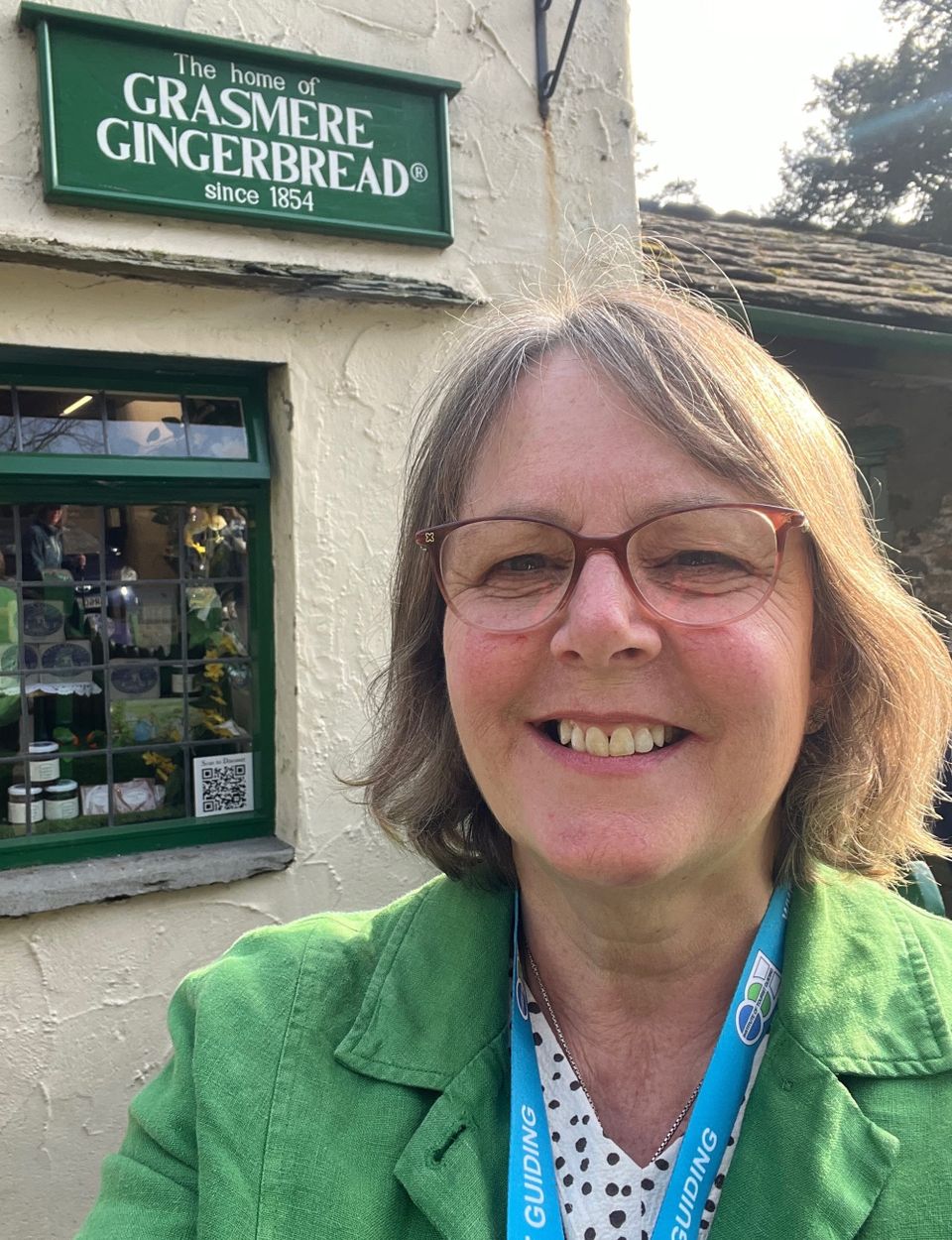
"This is the loveliest place that man hath ever found" is a phrase you will probably hear on any tour to Grasmere in the English Lake District. But who said it and why? The "who" is easy and nearly everyone knows the answer: it was the English Poet and Lake District resident, William Wordsworth. Often remembered for having 'wondered lonely as a cloud" and seeing "a host of golden daffodils", he was a nature lover, conservationist and an enthusiast walker and one of the founders of Romantic Poetry. He so loved the area that he never moved away again, living his final three decades in nearby Rydal, dying on 23rd April 1850 at the age of 80. The Wordsworth family graves in Grasmere have become a tourist attraction in their own right, with people making a pilgrimage to St Oswald's Church and then to the tiny unique shop on the edge of the churchyard to treat themselves to the delicious Grasmere Gingerbread.
Born on 7th April 1770 in Cockermouth, a small town just outside the area we refer to nowadays as the Lake District, William's childhood years were fraught with grief as he lost both his parents, first his mother and then his father. He attended grammar school in Hawkshead and stayed in lodgings there before going to complete his education at Cambridge University. He travelled overseas, he fell in love but ultimately by the age of 29 he was ready to return to his roots with his sister Dorothy. It was nearly Christmas when in December 1799, aged 29, he moved to Grasmere which at that time wasn't the busy village it is today, but a series of three settlements strung along the valley - Town End, where his home Dove Cottage is; Church Town, centred on St Oswald's church; and Town Head.
Much of the Grasmere you will see today was built as a result of a boom in tourism when in 1847 a new railway line terminating at Windermere enabled steam trains to be filled with excited passengers travelling from industrial towns of the North. Indeed, the Grasmere Gingerbread shop was in Wordsworth's time the church school and Sarah Nelson had not yet invented her now famous sweet and spicy gingerbread. These new tourists were the ones Wordsworth referred to in 1844 "On the Projected Kendal and Windermere Railway" saying "Is then no nook of English ground secure / From rash assault?".
Back to the "why, where and when" was the declaration made about the "loveliest place".
Dove Cottage in Town End, Grasmere was more than just a rented cottage for the Wordsworths, it was their home shared with friends and relatives. The garden to the rear received a lot of love and care from the Wordsworths as they enjoyed their outside space and its plants. This was their "orchard garden" and when in the Spring of 1802, only two years after moving in to Dove Cottage, the Wordsworths were about to set off on a journey for two months. William set about writing a poem to express how he felt about leaving the orchard garden he had become so fond of. "The Farewell" is a heartfelt sonnet dedicated to his "happy garden". Later that same year he married Mary, a childhood friend and continued living at Dove Cottage for a further six year.
So the garden orchard was or is the "loveliest spot that man hath ever found" and surely that suggests the loveliest place must be the vale of Grasmere, and the loveliest local speciality - the Gingerbread!
Sweet garden-orchard, eminently fair,
The loveliest spot that man hath ever found,
Farewell!--we leave thee to Heaven's peaceful care,
Thee, and the Cottage which thou dost surround.
Walking tours with me around the village of Grasmere bring out the history and heritage of the village, with its Wordsworth links and mountainous scenery you will also discover stories of those who lived here, the artists, the bookseller, the gingerbread maker. A tangle of timbers, tragic stories and uplifting stories and why an Arctic explorer followed his love to live here.